Power for a World That Never Stops.
From dependable backup generators to intelligent solar systems, we help businesses and communities build resilient energy solutions designed around the way they work.

GENERATION + SOLAR
BUILT AROUND DEMAND
Energy Should Work Around You.
Every operation has its own energy demands. Some require reliable backup when the grid fails. Others need a practical way to reduce dependence on conventional power, make better use of available resources, or prepare for changing energy requirements. Our approach begins with understanding those demands and matching them with the right combination of generation, solar technology, storage, and system planning.
Plan for continuity.
Match actual demand.
Build for growth.
Integrated Energy Flow Architecture
Choose the Energy System That Fits.

Industrial Generators
Dependable power generation for facilities where continuity, operating conditions, and load requirements matter.
EXPLORE GENERATORS →
Solar Power Systems
Solar systems designed around site conditions, available space, energy consumption, and long-term operating needs.
EXPLORE SOLAR →
Backup Power
Backup power arrangements for critical equipment, business operations, and essential services.
PLAN BACKUP POWER →
Battery Storage
Storage solutions that can complement solar generation and help manage when energy is available for use.
DISCOVER STORAGE →
Hybrid Energy
Integrated energy systems combining multiple sources according to demand, availability, and operating priorities.
EXPLORE HYBRID SYSTEMS →Energy Consultation
Practical technical guidance to help define requirements before selecting equipment or designing an energy system.
DISCUSS YOUR PROJECT →Capture the Sun. Design for the Demand.
Solar power is most useful when it is designed around the place where it will operate. Site conditions, shading, roof or ground space, consumption patterns, and future requirements all influence the system design.

See How the Pieces Work Together.
Select an energy system component to explore its role in independent power architecture.
Solar Array
Solar panels convert available sunlight into electricity. Actual output depends on installation conditions, orientation, shading, and system configuration.
Stay Connected to What’s Next in Energy.
Receive practical energy insights, product updates, solar planning guidance, and news from powergenerators.
Industrial & Standby Generators
High-reliability power generation units built for continuous and emergency standby operations across industrial facilities and commercial installations.
20 – 2000
kVA Range
ISO 8528
Compliant Build
24/7
Service Support
Global
Delivery & Commissioning
Commercial Standby Generator
Heavy-duty power systems engineered for industrial plants, healthcare, and critical data centers.
- Fuel
- Diesel
- Start
- Auto / 10s
 CONTAINERIZED • 500 kVA
Enclosed Power Station
Sound-attenuated weatherproof enclosures designed for outdoor sites and harsh environments.
- Noise
- < 75 dB(A)
- Rating
- IP54
 HYBRID READY • 100 kVA
Gas-Powered Generator
Low-emission natural gas continuous generator units designed for seamless solar integration.
- Fuel
- Natural Gas
- Mode
- Continuous
 CONTINUOUS • 800 kVA
Prime Power Generator
Continuous-duty units for primary power applications where grid supply is unavailable or unreliable.
- Duty
- Prime
- Cooling
- Radiator
 MOBILE • 60 kVA
Mobile Diesel Generator
Trailer-mounted units for temporary sites, events, and rapid redeployment between locations.
- Mount
- Trailer
- Fuel
- Diesel
CRITICAL • 1200 kVA
Data Centre Backup Unit
High-capacity standby systems with fast transfer switching for data halls and life-safety loads.
- Transfer
- < 10s
- Load
- Critical
Not Sure Which Unit Fits Your Load?
Send us your load profile, site conditions, and runtime requirements. Our engineers will size a unit and return a specification sheet within two working days.
Solar Energy Systems
Custom engineered commercial and industrial photovoltaic power systems designed around specific site geography and consumption profiles.
10 kW – 5 MW
System Range
25 Years
Panel Performance
Tier 1
Components Only
End-to-End
Design & Commissioning

Commercial Rooftop & Ground Arrays
From manufacturing facility roofs to ground-mounted utility arrays, solar power provides predictable daylight power generation that reduces reliance on main grid lines during peak hours.
Every system begins with a site survey — roof loading, shading study, and a twelve-month consumption review — so the array is sized against your real load rather than a rule of thumb.
- Mounting
- Roof / Ground
- Monitoring
- Live Dashboard
- Warranty
- 10 – 25 Years
System Configurations
Sized per siteCommercial Rooftop PV
Ballasted or penetrating arrays sized to available roof area and structural loading, typically offsetting daytime operational demand.
50 kW – 1 MW
Ground-Mounted Arrays
Fixed-tilt or single-axis tracking arrays for sites with available land, delivering higher yield per panel and easier maintenance access.
250 kW – 5 MW
Solar + Storage + Genset
Combined systems that pair PV with battery storage and a standby generator for sites that cannot tolerate any interruption at all.
Bespoke
How a Project Runs
Four stages01
Site Survey
Roof or land assessment, shading study, and a full review of your last twelve months of consumption.
02
System Design
Array layout, inverter selection, and yield modelling, with a written proposal and payback estimate.
03
Installation
Mounting, wiring, and commissioning by our own crews, scheduled around your operating hours.
04
Monitoring
Live performance dashboard, fault alerts, and scheduled maintenance for the life of the system.
Ready to Size a Solar System?
Send us your site address, roof or land area, and a recent utility bill. We will return a yield estimate and indicative layout within three working days.
Battery Storage Architecture
Manage peak demand loads and backup continuity with high-capacity battery energy storage systems (BESS).
30 kWh – 10 MWh
Capacity Range
< 20 ms
Transfer Time
6000+
Cycle Life
LFP
Chemistry
What Storage Does for a Site
Six applicationsGrid Stabilization
Smooth out frequency fluctuations and provide instant backup transfer during voltage drops.
Peak Shaving
Store excess solar energy during mid-day and discharge during high tariff periods.
Hybrid Integration
Combine battery storage with backup diesel generators to optimize fuel efficiency.
Load Shifting
Charge overnight on low tariffs and discharge through the day, decoupling consumption from peak pricing.
Solar Self-Consumption
Capture surplus generation that would otherwise be exported at a low rate, and use it on site after dark.
Demand Charge Reduction
Clip brief spikes in site demand that would otherwise set the monthly capacity charge for the whole billing period.
Three Ways to Deploy
Sized per siteOn-Site Storage
Containerized units installed within your own boundary, charged from your solar array or the grid. Reduces imported energy and demand charges directly.
- Typical size
- 100 kWh – 2 MWh
- Footprint
- 1–3 containers
Storage + Genset
Batteries carry the short interruptions and light loads, letting the generator stay off for most of the day and run only at its most efficient point.
- Typical size
- 30 – 500 kWh
- Fuel saving
- 20 – 40%
Off-Grid Supply
For sites with no reliable grid connection at all: PV, storage, and a backup generator sized together to carry the full load year-round.
- Typical size
- Bespoke
- Autonomy
- 1 – 3 days
What Would Storage Save Your Site?
Share a recent utility bill and your load profile. We will model the peak-shaving and self-consumption benefit, and return an indicative system size and payback within three working days.
Different Industries. Different Demands.
A generator, a solar array, or a battery system is only as good as its fit to the site it serves. Each sector below carries its own load profile, tolerance for downtime, and regulatory expectations — so we scope each one differently.
6 Sectors
Served Directly
24/7
Critical-Load Support
Turnkey
Design to Commissioning
SLA
Backed Maintenance
Manufacturing & Industry
Continuous power reliability for manufacturing lines and heavy machinery where unprogrammed downtime causes significant production loss.
Typical scope: standby generator + peak shaving
Healthcare & Essential Services
Uninterrupted emergency backup energy systems for hospitals, clinics, and critical health infrastructure.
Typical scope: fast-transfer backup + UPS integration
Commercial Buildings
Intelligent solar and backup generator integration for office parks, retail centers, and logistics hubs.
Typical scope: rooftop PV + battery storage
Data Centres & Telecoms
High-capacity standby systems with sub-ten-second transfer, sized for data halls, telecom towers, and edge sites that cannot tolerate a single interruption.
Typical scope: N+1 standby + BESS
Agriculture & Rural Sites
Off-grid and hybrid power for irrigation, cold storage, and processing facilities where a grid connection is weak, distant, or unavailable entirely.
Typical scope: solar + storage + genset
Construction & Events
Mobile and temporary power for active construction sites, remote camps, and events, with rapid redeployment between locations as projects move.
Typical scope: trailer-mounted diesel units
How We Scope a Sector
Three questions01
What Happens When Power Fails?
A shed production run and a failed life-support system call for very different answers. The cost of downtime sets the whole design brief.
02
What Does the Load Look Like?
Steady industrial demand, sharp commercial peaks, and seasonal agricultural loads each point to a different mix of generator, solar, and storage.
03
What Does the Site Allow?
Roof area, available land, noise limits, and fuel storage all constrain the design. We size to the site that exists, not the one in a brochure.
Which Sector Fits Your Site?
Tell us what you operate and what happens when the power goes down. We will come back with the right system mix, an indicative size, and a clear next step.
Energy Journal & Insights
Practical notes on sizing, specifying, and running power systems — written by the engineers who commission them, not by a marketing team.

What Actually Drives Generator Fuel Consumption
Load factor matters far more than nameplate rating. A lightly loaded 500 kVA set can burn more fuel per kWh than a properly matched 250 kVA unit — and most sites never check which they are running.
 GUIDE • 5 MIN READ
Generator Sizing: Questions to Ask Before Selection
Essential considerations for matching starting kVA load requirements to generator set rating.
 ANALYSIS • 7 MIN READ
How Solar and Battery Storage Can Work Together
Understanding power transfer switches and inverter control logic in hybrid industrial microgrids.
 STRATEGY • 4 MIN READ
Planning Backup Power for Business Continuity
Key steps in auditing emergency circuit loads and establishing emergency fuel management plans.
 GUIDE • 6 MIN READ
A Realistic Maintenance Calendar for Standby Sets
What to check weekly, quarterly, and annually — and the two items most sites skip until a test run fails.
 CASE NOTE • 8 MIN READ
Cold Storage, One Grid Failure, and a 400 kVA Save
How a hybrid solar and storage design kept a distribution centre running through a twelve-hour outage.
 ANALYSIS • 5 MIN READ
The Hidden Cost of Idle Generator Capacity
Oversized standby sets are common, comfortable, and expensive. A look at where the money actually goes.
The Journal, by Email
New guides and case notes sent roughly once a month. No product promotions — just the engineering write-ups.
Generator Sizing: Questions to Ask Before Selection
Most sizing mistakes are made before anyone opens a catalogue. These are the questions worth answering first.

Selecting the right size generator set involves evaluating starting loads, continuous demand, fuel preferences, and ambient operating conditions. Oversizing leads to wet stacking in diesel engines, while undersizing risks system tripping during motor startup spikes.
Before selecting equipment, perform a full load audit to identify critical circuits versus non-essential building loads.
Start With the Load, Not the Rating
The most common error is beginning with a kVA figure — perhaps from a previous installation, or a neighbouring site — and working backwards. A generator is not sized by nameplate alone, but by the shape of the load it must carry. Two sites with identical monthly consumption can need very different sets if one has large motors and the other has mostly resistive heating.
Split your audit into three columns: continuous load, intermittent load, and starting load. Motors, compressors, and pumps belong in the third column, where the inrush current can be several times the running figure. That peak, not the average, is often what sets the rating.
Four Questions Worth Answering First
- 01What starts at once? A single 90 kW motor starting across the line is a different problem from four 30 kW motors staggered ten seconds apart. Sequence matters as much as total load.
- 02What is the lowest load? Diesel sets run poorly below roughly 30% of rating. If the overnight load is tiny, a single large set will spend its life underloaded — which is where wet stacking and glazed cylinders begin.
- 03How hot does it get? Ratings are quoted at standard ambient conditions. A set installed in an enclosed plant room at 45°C can lose a meaningful percentage of its output before it ever runs.
- 04How long must it run? Standby duty and prime duty are rated differently. A set expected to carry full load for days at a time should be specified as prime, not standby.
“The right question is not how big a generator you need, but how little it can be and still carry the load that matters.”
Where Oversizing Goes Wrong
An oversized set is comfortable to specify and expensive to own. Fuel consumption at light load does not fall proportionally — a 500 kVA set carrying 60 kVA can burn nearly as much fuel per hour as one carrying 200 kVA, which means the cost per usable kWh climbs sharply. Maintenance intervals are set by running hours, not by energy delivered, so an oversized set also demands more servicing for the same output.
There are legitimate reasons to oversize: planned expansion, future EV charging, or a large motor that must start across the line. The key is to name the reason explicitly in the specification, so that later readers can tell a deliberate margin from an accident.
A Note on Hybrid Options
Where the load profile is spiky, pairing a smaller generator with battery storage often beats specifying a larger set. The battery absorbs the short peaks, the generator runs steadily at its efficient point, and total fuel use falls. This is covered in more detail in our analysis of solar and battery storage working together.
Key Takeaways
- —Audit continuous, intermittent, and starting loads separately before looking at any rating.
- —Check the lowest sustained load as carefully as the highest — underloading damages diesel sets.
- —Correct quoted ratings for the ambient temperature of the actual plant room.
- —Specify standby or prime duty deliberately, based on expected run duration.
Written by the Engineering Team
Specification and commissioning notes from our project engineers.
Related Reading
All Articles → GUIDE • 6 MIN READ
A Realistic Maintenance Calendar for Standby Sets
 ANALYSIS • 5 MIN READ
The Hidden Cost of Idle Generator Capacity
How Solar and Battery Storage Can Work Together
Understanding power transfer switches and inverter control logic in hybrid industrial microgrids.

Solar panels and batteries are often discussed as a single "hybrid" system, but they perform different jobs. Solar generates during daylight, with output that rises and falls with the weather. Batteries store and release energy on demand, regardless of the sun. The value of combining them lies in what each can do that the other cannot.
In an industrial setting, the combination is usually designed around three goals: reducing grid import, maintaining power through outages, and smoothing the load seen by the generator. Each goal imposes different requirements on the control system.
The Role of the Transfer Switch
In a hybrid microgrid, the power transfer switch (PTS) is the component that decides where power comes from at any moment. It sits between the grid, the generator, the solar inverter, and the battery inverter, and it must open and close in a controlled sequence to avoid back-feeding the grid or damaging equipment.
The PTS logic is usually configured around three states: grid-connected, islanded (grid down, generator and storage carrying the load), and transition. The transition state is where most commissioning problems occur, because the switch must coordinate with the inverters to match voltage and frequency before closing.
How the Inverters Talk to Each Other
- 01Frequency-watt control. The battery inverter adjusts its output based on grid frequency, providing fast response to load changes without waiting for the generator to ramp.
- 02Volt-watt control. The solar inverter reduces output when voltage rises, preventing overvoltage as generation exceeds local demand.
- 03State-of-charge limits. The battery inverter curtails charging when the battery is full and stops discharging when it is depleted, so the generator or grid picks up the difference.
- 04Generator assist. When the battery is low and solar is insufficient, the controller starts the generator and holds it at a steady load while the battery smooths the peaks.
"Solar decides when power is available. The battery decides when it is used. The controller decides which one the site actually needs."
Sizing the Two Together
Solar and battery are sized against different constraints. Solar is sized by roof or land area, by the site's daytime load, and by the export limit imposed by the utility. The battery is sized by the longest expected outage, by the peak load it must carry alone, and by how much of the solar surplus it needs to absorb.
A common mistake is to size the battery for the solar array rather than for the load. A large array paired with a small battery will export most of its generation and provide little resilience. A modest array paired with a well-sized battery will cover the site's critical loads through an outage and still reduce daytime import.
Where Hybrid Designs Go Wrong
The failures we see most often are not in the equipment but in the control logic. A transfer switch configured for the wrong islanding condition will trip the site instead of protecting it. A battery inverter set to the wrong state-of-charge window will either refuse to discharge when needed or fail to recharge before the next outage.
The remedy is commissioning: run the system through each transition state deliberately, log the behaviour, and adjust the setpoints before handover. A hybrid system that has never been islanded on purpose is a system whose behaviour is unknown.
A Note on Generators
Where a generator is part of the hybrid, the battery can absorb the peaks that would otherwise force the generator to run at low load. This is covered in more detail in our guide to generator sizing, and in the analysis of fuel consumption.
Key Takeaways
- —Solar and battery perform different jobs — size each against its own constraint, not against the other.
- —The transfer switch and inverter control logic determine whether the hybrid system behaves correctly under outage.
- —Commission the system through each transition state before handover — an untested island is an unknown island.
- —Pairing storage with a generator lets the generator run at its efficient point while the battery handles peaks.
Written by the Engineering Team
Specification and commissioning notes from our project engineers.
Related Reading
All Articles → CASE NOTE • 8 MIN READ
Cold Storage, One Grid Failure, and a 400 kVA Save
 GUIDE • 5 MIN READ
Generator Sizing: Questions to Ask Before Selection
Planning Backup Power for Business Continuity
Key steps in auditing emergency circuit loads and establishing emergency fuel management plans.
Backup power is often planned around a single question: how big a generator do we need? That question is the last one to answer, not the first. Business continuity depends on knowing which loads must stay on, for how long, and what happens when the fuel runs low — none of which is a generator sizing problem.
A continuity plan starts with the business, not the plant room. What does the site do, what does it lose per hour of downtime, and which of those losses can be avoided with power and which cannot?
Step One: Audit the Emergency Circuits
The first task is to walk the site and list every circuit that must remain energised. This is not the same as listing every circuit that is currently connected to the backup panel. Panels accumulate loads over time, and a circuit that was critical five years ago may now be redundant — or a new critical load may have been added without updating the plan.
Split the audit into three tiers:
- 01Life safety. Fire alarms, emergency lighting, sprinkler pumps, and evacuation systems. These must run regardless of cost or duration.
- 02Business critical. IT servers, cold storage, process controls, and security systems. These determine how long the site can operate without grid power.
- 03Discretionary. Comfort cooling, non-essential lighting, and general office loads. These can be shed first when fuel or capacity is limited.
Step Two: Establish the Duration Target
The duration target is a business decision, not an engineering one. A site that can tolerate a four-hour outage needs a very different system from one that must run for three days. The target should be written down and agreed with the people who own the business risk, because it drives every downstream choice: fuel storage, generator redundancy, and battery capacity.
"A backup power plan is only as good as the fuel plan behind it. Most sites know their generator rating and not their hours of autonomy."
Step Three: The Fuel Management Plan
Fuel is where continuity plans most often fail. A generator rated for the load is useless if the tank is empty, the fuel has degraded, or the delivery route is blocked. The fuel plan should cover:
- 01Autonomy. How many hours of run time does the on-site tank provide at the expected load? This should be calculated, not assumed from tank size.
- 02Fuel quality. Diesel degrades over time. Stored fuel should be tested periodically and polished or replaced on a schedule.
- 03Resupply. Who delivers, how quickly, and what happens if the roads are closed? A resupply contract is not a resupply plan.
- 04Priority allocation. If fuel is limited, which loads get it? This should be decided in advance, not during the outage.
Step Four: Test the Plan, Not Just the Generator
Most sites test the generator. Fewer test the plan. A generator test confirms that the set starts and carries load. A plan test confirms that the transfer switch operates, that the critical circuits are actually energised, that the fuel log is current, and that the people who need to act know what to do.
Run the plan test at least annually, and after any significant change to the site's loads or infrastructure. Record what happened, including what went wrong, and update the plan accordingly.
Where Battery Storage Fits
Battery storage can extend autonomy without adding fuel, and can bridge the gap between grid failure and generator start. It is not a replacement for a generator on long outages, but it is often the cheapest way to cover short outages and to reduce the load the generator must carry. This is covered in more detail in our analysis of solar and battery storage working together.
Key Takeaways
- —Start with the business, not the generator — know what must stay on and for how long.
- —Tier your loads into life safety, business critical, and discretionary, and plan to shed the last tier first.
- —Calculate fuel autonomy from tank size and expected load — do not assume it.
- —Test the plan, not just the generator — and update it after any significant change.
Written by the Engineering Team
Specification and commissioning notes from our project engineers.
Related Reading
All Articles → GUIDE • 6 MIN READ
A Realistic Maintenance Calendar for Standby Sets
 CASE NOTE • 8 MIN READ
Cold Storage, One Grid Failure, and a 400 kVA Save
A Realistic Maintenance Calendar for Standby Sets
What to check weekly, quarterly, and annually — and the two items most sites skip until a test run fails.
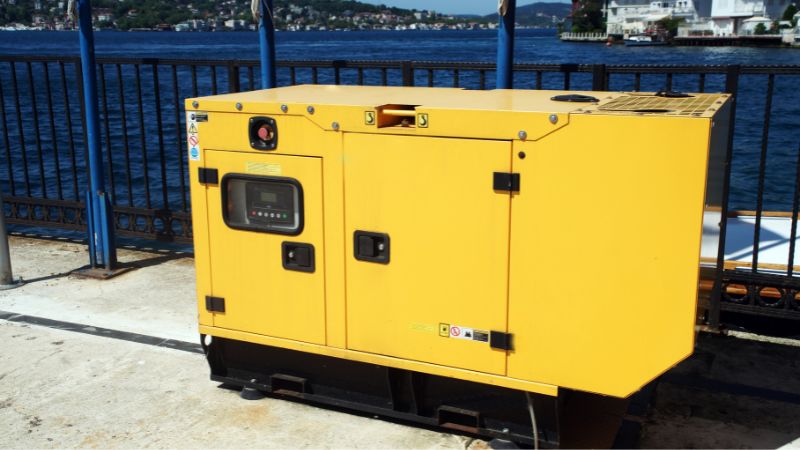
A standby generator that has never failed is not necessarily a reliable generator — it is a generator that has never been asked to carry load for long enough to reveal a fault. The purpose of a maintenance calendar is to make sure the set is tested in the conditions it will actually face, not just the conditions that are convenient to test it in.
The calendar below is written for a diesel standby set in an industrial or commercial plant room. The intervals assume the manufacturer's recommendations are the baseline; the notes explain where sites commonly deviate and why.
Weekly Checks
- 01Visual inspection. Look for leaks, loose fittings, and signs of rodent or water ingress. Check that the enclosure is secure and the exhaust is clear.
- 02Fluid levels. Oil, coolant, and fuel. A slowly falling level is a problem before it becomes a failure.
- 03Battery condition. Check the charger is operating and the battery voltage is within spec. Most no-start failures are battery failures.
- 04Fuel log. Confirm the tank level matches the log. Discrepancies indicate a leak or a theft — both are continuity risks.
Monthly Checks
- 01Test run under load. A no-load run confirms the set starts. A load run confirms it can carry the site. Run at a meaningful load for at least 30 minutes.
- 02Transfer switch test. Confirm the switch operates cleanly and the critical circuits energise. This is the step most sites skip.
- 03Alarm and fault log review. Read the controller log and investigate any recurring fault, even if the set still starts.
"A generator that has only ever been tested at no load has only ever proven that it starts. It has not proven that it can carry the site."
Quarterly Checks
- 01Fuel quality test. Diesel degrades. Test for water, microbial growth, and cetane. Polish or replace if results are out of spec.
- 02Air and fuel filter inspection. Replace on condition or on schedule, whichever comes first.
- 03Cooling system check. Inspect hoses, clamps, and the radiator for blockage. A set that overheats under load is a set that will trip.
- 04Battery load test. A voltage check is not enough. Load-test the battery to confirm it can deliver cranking current.
Annual Checks
- 01Full load bank test. Run the set at or near rated load for a sustained period. This is the only way to confirm it can carry the site at full demand.
- 02Oil and filter change. Even on low-hour sets, oil degrades with time and contamination.
- 03Fuel system inspection. Check injectors, fuel lines, and the tank for signs of degradation.
- 04Control system review. Confirm setpoints, alarm thresholds, and auto-start logic are correct for the current site configuration.
- 05Documentation update. Record what was done, what was found, and what changed. An unrecorded maintenance history is a maintenance history that will be repeated.
The Two Items Most Sites Skip
The first is the transfer switch test. Sites test the generator and assume the switch will work. When the grid fails, the switch is the component that determines whether the site actually receives power — and it is the component most likely to have seized or drifted out of adjustment.
The second is the fuel quality test. Sites check the fuel level and assume the fuel is usable. Diesel that has sat for a year may still be at the right level and still be unfit to burn. The failure mode is a generator that starts, runs briefly, and then stops — which is worse than a generator that never started, because it delays the response.
A Note on Low-Hour Sets
Standby sets often accumulate very few running hours. This does not mean they need less maintenance — it means they need different maintenance. Time-based items (fuel quality, battery condition, coolant) matter more than hour-based items. A set that runs 20 hours a year still needs its fuel tested, its battery load-tested, and its transfer switch exercised on schedule.
Key Takeaways
- —Test under load, not just at no load — a no-load run only proves the set starts.
- —Exercise the transfer switch monthly — it is the component most likely to fail silently.
- —Test fuel quality quarterly — diesel degrades even when the tank level looks fine.
- —Low-hour sets need time-based maintenance, not less maintenance.
Written by the Engineering Team
Specification and commissioning notes from our project engineers.
Related Reading
All Articles →Generator Sizing: Questions to Ask Before Selection
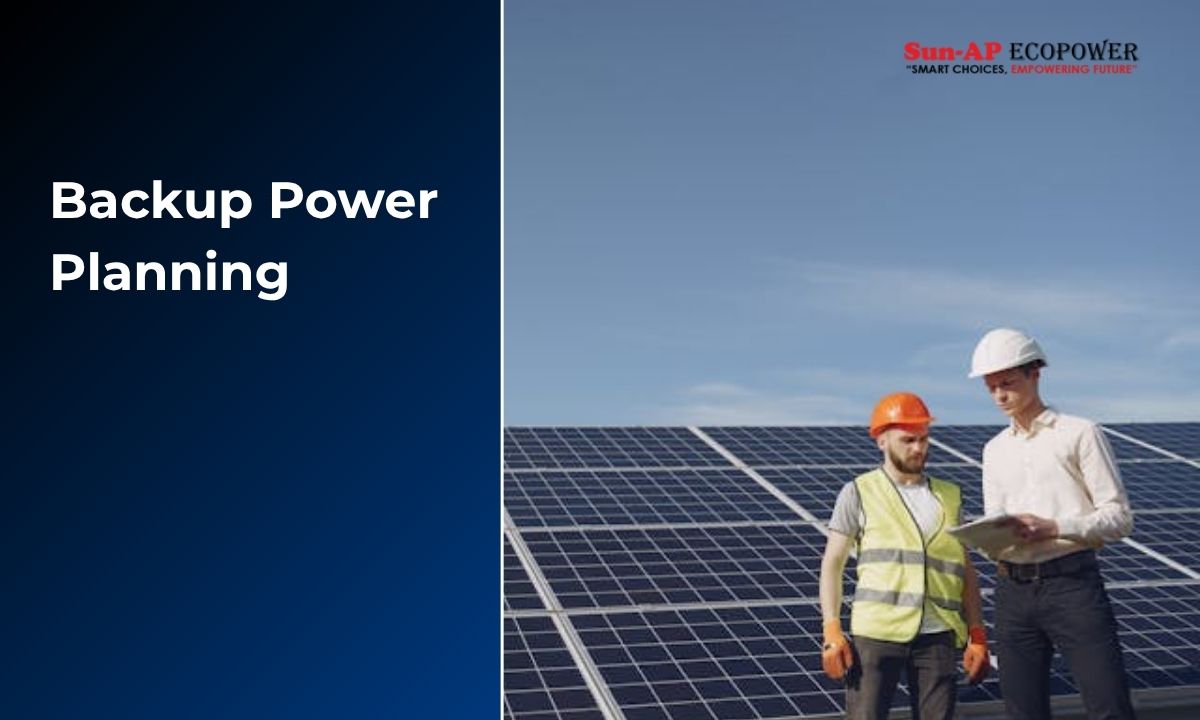 STRATEGY • 4 MIN READ
Planning Backup Power for Business Continuity
Cold Storage, One Grid Failure, and a 400 kVA Save
How a hybrid solar and storage design kept a distribution centre running through a twelve-hour outage.
This case note describes a distribution centre in a region with a single grid feed and a history of outages that ranged from a few minutes to half a day. The site had a standby generator, but a capacity review showed that it could not carry the full refrigeration load during a long outage. The brief was to fix that without buying a larger generator.
The Starting Point
The site's critical load was refrigeration: cold rooms, blast freezers, and the compressors that serve them. The existing generator was rated at 250 kVA, and the combined refrigeration load at the height of summer was around 380 kVA. During a long outage, the generator would be overloaded within minutes of the transfer switch closing.
The obvious response was to specify a 500 kVA set. The site had the space, and the budget could stretch to it. But a 500 kVA set would spend almost all of its life carrying a small load — the site's normal backup demand was closer to 120 kVA — and would be inefficient and expensive to maintain. The engineering team proposed a different approach.
The Hybrid Design
The design combined the existing 250 kVA generator with a battery storage system and a roof-mounted solar array. The roles were divided as follows:
- 01Solar. A 120 kWp array on the warehouse roof, which reduced daytime import and provided some generation during outages that occurred in daylight.
- 02Battery storage. A 200 kWh battery with a 150 kW inverter, sized to cover the peak refrigeration load that the generator could not carry alone, and to bridge the gap between grid failure and generator start.
- 03Generator. The existing 250 kVA set, retained and controlled so that it ran at a steady load while the battery handled the peaks.
- 04Control system. A single controller that coordinated the transfer switch, the battery inverter, the solar inverter, and the generator, with the ability to shed non-critical loads if the battery state of charge fell below a set threshold.
"The right answer was not a bigger generator. It was a smaller generator, used better."
The Outage
The system was commissioned in the spring. The first significant test came in the summer, when a grid failure lasted twelve hours. The sequence was as follows:
- 010–10 seconds. The battery inverter detected the grid failure and islanded the critical panel. Refrigeration compressors continued to run without interruption.
- 0210–60 seconds. The generator started and synchronised. The battery absorbed the compressor inrush as the generator came online.
- 031–12 hours. The generator carried a steady load of around 200 kVA. The battery covered the peaks above that, and the solar array contributed during the daylight hours. Non-critical loads were shed automatically when the battery state of charge fell below 30%.
- 04Recovery. When the grid returned, the controller synchronised and transferred the load back, then recharged the battery from the grid and solar.
The Outcome
The site ran through the twelve-hour outage without losing refrigeration. The generator ran at its efficient point for the duration, and fuel consumption was lower than it would have been with a larger set running at light load. The battery was recharged by the following morning.
The capital cost of the hybrid system was approximately 60% of the cost of a new 500 kVA generator and its associated switchgear and fuel storage. The site retained its existing generator, added resilience, and reduced its daytime grid import through solar generation.
What Made It Work
Three things made the design succeed. First, the load audit was done properly, and the peak load was measured rather than estimated. Second, the battery was sized for the peak that the generator could not carry, not for the solar array. Third, the control system was commissioned through each transition state deliberately, including a planned islanding test before handover.
The lesson is not that hybrid systems are always the right answer. It is that the right answer depends on the load profile, and that a smaller generator used well can outperform a larger one used poorly.
Related Notes
The load audit approach used here is described in more detail in our guide to generator sizing. The control logic is covered in our analysis of solar and battery storage working together.
Key Takeaways
- —Measure the peak load before specifying equipment — the audit drives the design.
- —A battery sized for the load, not the solar array, is what provides resilience.
- —Commissioning through each transition state is what turns a design into a working system.
- —A smaller generator used well can outperform a larger one used poorly.
Written by the Engineering Team
Specification and commissioning notes from our project engineers.
Related Reading
All Articles →How Solar and Battery Storage Can Work Together
Generator Sizing: Questions to Ask Before Selection
The Hidden Cost of Idle Generator Capacity
Oversized standby sets are common, comfortable, and expensive. A look at where the money actually goes.
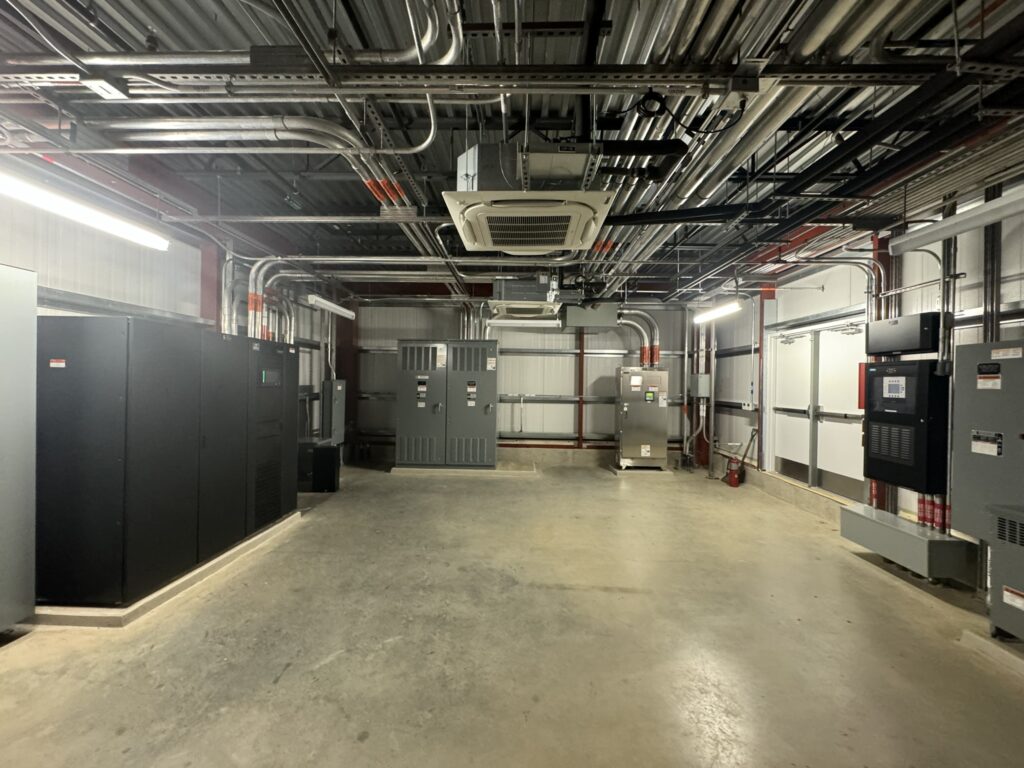
Oversizing a standby generator is the easiest decision in the plant room. It removes the risk of being caught short, it leaves room for expansion, and it is rarely challenged because the cost is paid over years rather than at the point of purchase. The problem is that the cost is real, and it accumulates quietly in fuel, maintenance, and capital that never delivers a return.
This analysis looks at where the money actually goes when a generator is larger than the load it serves — and why the cheapest set to buy is rarely the cheapest to own.
Where the Money Goes
- 01Fuel at light load. Fuel consumption does not fall in proportion to load. A 500 kVA set carrying 60 kVA can burn nearly as much fuel per hour as one carrying 200 kVA, because the engine must overcome its own friction and cooling losses regardless of output. The cost per usable kWh climbs sharply.
- 02Maintenance on running hours. Service intervals are set by running hours, not by energy delivered. An oversized set that runs for the same number of hours delivers less useful energy per service, so the maintenance cost per kWh is higher.
- 03Capital tied up. The difference between a 250 kVA and a 500 kVA set is not just the generator — it is the switchgear, the fuel tank, the foundation, and the plant room space. That capital delivers no return if the capacity is never used.
- 04Wear from underloading. Diesel sets run poorly below roughly 30% of rating. Wet stacking, glazed cylinders, and degraded oil are the long-term consequences of a set that never gets warm enough to burn cleanly.
"The cost of idle capacity is not paid at the point of purchase. It is paid every hour the set runs below its efficient point."
The Comfort Trap
Oversizing is comfortable because the downside is invisible. A set that is too large still starts, still carries the load, and still passes its test runs. The fuel bill is higher, the maintenance cost is higher, and the engine wears faster — but none of these show up as a failure, so none of them trigger a review.
The trap is reinforced by the way specifications are written. A designer who specifies a 500 kVA set for a 200 kVA load is unlikely to be criticised. A designer who specifies a 250 kVA set and is later asked to carry an unplanned load is likely to be blamed. The asymmetry pushes specifications upward, one safety margin at a time.
When Oversizing Is Justified
There are legitimate reasons to specify a larger set, and they should be named explicitly in the specification so that later readers can tell a deliberate margin from an accident:
- 01Planned expansion. A documented plan to add load within the set's life, with a date and a load estimate.
- 02Large motor starting. A single motor that must start across the line can set the rating even when the running load is small.
- 03Future EV charging. A known future load with a known profile.
- 04Redundancy. Two sets each rated for the full load, so that one can carry the site while the other is serviced.
The Alternatives
Where the load profile is spiky or the peak is short, a smaller generator paired with battery storage often beats a larger set. The battery absorbs the peaks, the generator runs steadily at its efficient point, and total fuel use falls. This is covered in more detail in our analysis of solar and battery storage working together, and in the case note on a cold storage site that replaced a planned 500 kVA set with a hybrid design.
Where the load is genuinely variable but not spiky, load consolidation — moving loads onto fewer sets and shutting the rest down — can achieve the same effect at lower cost.
What to Measure
The first step is to measure the actual load profile, not the design load. Log the load for at least a week, including the peak, the average, and the lowest sustained load. Compare the measured profile against the set's rating. If the average load is below 40% of rating, the set is a candidate for right-sizing or for a hybrid design.
The second step is to measure fuel consumption against the manufacturer's part-load curve. If the measured consumption is significantly higher than the curve predicts, the set is either poorly matched to the load or in need of service.
Key Takeaways
- —Fuel per kWh rises sharply below roughly 40% load — an oversized set is often the least efficient choice.
- —Maintenance is set by running hours, not energy delivered, so idle capacity raises cost per kWh.
- —Name the reason for any deliberate margin in the specification, so it can be told apart from an accident.
- —Measure the load profile before deciding — right-sizing or a hybrid design often beats a larger set.
Written by the Engineering Team
Specification and commissioning notes from our project engineers.
Related Reading
All Articles →What Actually Drives Generator Fuel Consumption
Cold Storage, One Grid Failure, and a 400 kVA Save
Contact powergenerators
Speak with an energy specialist regarding generators, solar arrays, or energy storage engineering.
Headquarters: 100 Industrial Parkway, Clean Energy District
General Inquiries: info@powergenerators.info
Send Us a Message
Tell us about your project and we will route your enquiry to the right engineer. Fields marked with * are required.
Project Enquiries
For new projects, sizing reviews, and specification support.
projects@powergenerators.info →Service & Maintenance
For existing installations, servicing, and emergency support.
service@powergenerators.info →Tell Us What You Need to Power.
Privacy Policy
Effective Date: October 2026 · Last Updated: October 2026
powergenerators ("we", "us", "our") respects your privacy and is committed to protecting the personal information you share with us. This Privacy Policy explains what information we collect, how we use it, where it is stored, and the choices you have. It applies to this website and to any interactive tools, forms, or newsletter subscriptions made available through it.
1. Information We Collect
We aim to collect as little information as possible. The categories of information we may collect are:
- —Information you provide voluntarily. This includes your name, work email address, company name, phone number, and any message or project details you submit through enquiry forms, newsletter signup forms, or interactive specification tools.
- —Information generated by your use of the site. This may include the pages you visit, the tools you interact with, and the preferences you set, where such information is stored locally in your browser.
- —Information stored locally. Demo forms, newsletter subscriptions, and interactive tool inputs are stored in your browser's local storage for demonstration purposes. This data remains on your device and is not transmitted to us unless you explicitly submit it through a form that sends it.
2. How We Use Your Information
We use the information we collect only for the purposes for which it was provided, including:
- —Responding to enquiries and requests for information about our products and services.
- —Sending newsletter updates, guides, and case notes where you have subscribed and consented to receive them.
- —Improving the website, its tools, and its content based on how visitors use them.
- —Complying with legal obligations where applicable.
We do not use your information for automated decision-making or profiling, and we do not use it for any purpose incompatible with the reason it was collected.
3. Legal Basis for Processing
Where applicable law requires a legal basis for processing personal information, we rely on one or more of the following: your consent (for example, when you subscribe to the newsletter), the performance of a contract or steps taken at your request before entering a contract (for example, responding to a project enquiry), our legitimate interests in operating and improving the website, and compliance with legal obligations.
4. Cookies and Local Storage
This website may use cookies and browser local storage to remember your preferences, support interactive tools, and understand how the site is used. Local storage is used in particular for demo forms and newsletter subscriptions, as described above.
You can clear cookies and local storage at any time through your browser settings. Doing so may reset preferences or remove locally stored demo data, but it will not affect your ability to browse the site.
5. Sharing and Disclosure
We do not sell, rent, or distribute personal information to external marketers without your permission. We may share information only in the following limited circumstances:
- —Service providers. Trusted providers who help us operate the website or communicate with you, bound by confidentiality and data-protection obligations.
- —Legal requirements. Where we are required to disclose information by law, regulation, court order, or a lawful request from a public authority.
- —Business transfers. In connection with a merger, acquisition, or sale of assets, where information may be transferred as part of the business, subject to this policy.
6. Data Retention
We retain personal information only for as long as necessary to fulfil the purposes for which it was collected, or as required by law. Newsletter subscription data is retained until you unsubscribe or request deletion. Enquiry data is retained for a reasonable period to allow us to respond and to maintain a record of the communication.
7. Your Rights
Depending on your location, you may have the right to:
- —Access the personal information we hold about you.
- —Request correction of inaccurate or incomplete information.
- —Request deletion of your information, subject to legal retention obligations.
- —Object to or restrict certain processing.
- —Withdraw consent at any time where processing is based on consent.
- —Lodge a complaint with a supervisory authority.
To exercise any of these rights, please contact us using the details below. We will respond within the timeframe required by applicable law.
8. Data Security
We take reasonable technical and organisational measures to protect personal information against unauthorised access, alteration, disclosure, or destruction. However, no method of transmission over the internet or method of electronic storage is completely secure, and we cannot guarantee absolute security.
9. International Transfers
Where personal information is transferred outside your country of residence, we take steps to ensure that it receives an adequate level of protection, including through contractual safeguards where required.
10. Children's Privacy
This website is intended for business and professional users and is not directed at children. We do not knowingly collect personal information from children. If you believe a child has provided us with personal information, please contact us so that we can take appropriate action.
11. Third-Party Links
This website may contain links to third-party websites. We are not responsible for the privacy practices or content of those websites. We encourage you to review the privacy policies of any third-party site you visit.
12. Changes to This Policy
We may update this Privacy Policy from time to time to reflect changes in our practices or legal requirements. The "Last Updated" date at the top of this page indicates when the policy was last revised. We encourage you to review this page periodically.
13. Contact Us
If you have questions about this Privacy Policy, or wish to exercise any of your rights, please contact us through the enquiry form on this website. We will do our best to address your concerns promptly.
Terms and Conditions
Effective Date: October 2026 · Last Updated: October 2026
These Terms and Conditions ("Terms") govern your access to and use of the powergenerators website, including its interactive tools, energy diagrams, specification listings, and any content made available through it. By accessing or using this website, you agree to be bound by these Terms. If you do not agree, please do not use the site.
1. Use of the Website
You may use this website for lawful purposes only. You agree not to:
- —Use the site in any way that breaches applicable law or regulation.
- —Attempt to gain unauthorised access to the site, its servers, or any connected systems.
- —Interfere with the proper functioning of the site, including by introducing malicious code or overloading the infrastructure.
- —Scrape, copy, or reproduce substantial portions of the site's content without permission.
- —Use the site to transmit unsolicited commercial communications.
2. Informational Purpose Only
Interactive tools, energy diagrams, and specification listings are provided for general informational purposes. They are intended to support preliminary planning and discussion, not to replace professional engineering advice. Any sizing, specification, or performance figures produced by the tools are indicative only and must be verified by a qualified engineer before being used for procurement, installation, or commissioning.
We make reasonable efforts to keep the information on this site accurate and current, but we do not warrant that it is complete, accurate, or up to date in every respect.
3. No Professional Relationship
Your use of this website does not create an engineering, consultancy, or other professional relationship between you and powergenerators. Any advice or recommendation obtained through the site should be confirmed through a formal engagement before being relied upon for a project.
4. Intellectual Property
All content on this website — including text, graphics, logos, images, diagrams, and the design and layout of the site — is owned by or licensed to powergenerators and is protected by intellectual property laws. You may view, download, and print content for your own internal, non-commercial use, provided you do not remove any copyright or proprietary notices. Any other use, including reproduction, modification, distribution, or republication, requires our prior written consent.
5. User Submissions
Where you submit information through forms or interactive tools, you are responsible for ensuring that the information is accurate and that you have the right to share it. You grant us permission to use the information for the purpose for which it was submitted, as described in our Privacy Policy. You must not submit content that is unlawful, misleading, or infringes the rights of any third party.
6. Third-Party Content and Links
This website may include links to third-party websites or content. Such links are provided for convenience only. We do not control, endorse, or assume responsibility for third-party content, and we are not liable for any loss or damage arising from your use of it. You access third-party sites at your own risk.
7. Limitation of Liability
To the fullest extent permitted by law, powergenerators shall not be liable for any indirect, incidental, special, consequential, or punitive damages, or for any loss of profits, revenue, data, or goodwill, arising out of or in connection with your use of, or inability to use, this website or its content. This includes, without limitation, any reliance on information, tools, or specifications provided on the site.
Nothing in these Terms excludes or limits liability for death or personal injury caused by negligence, fraud, or any other liability that cannot be excluded or limited under applicable law.
8. Indemnity
You agree to indemnify and hold harmless powergenerators, its officers, employees, and agents from any claims, losses, liabilities, damages, costs, or expenses arising out of your breach of these Terms or your misuse of the website.
9. Availability and Changes
We aim to keep the website available, but we do not guarantee uninterrupted access. We may suspend, withdraw, or restrict access to all or part of the site for maintenance, updates, or other reasons without notice. We may also update, modify, or remove content, tools, or features at any time.
10. Privacy
Your use of the website is also governed by our Privacy Policy, which explains how we collect, use, and protect personal information. Please review it alongside these Terms.
11. Governing Law
These Terms are governed by and construed in accordance with the laws of the jurisdiction in which powergenerators operates, without regard to conflict-of-law principles. Any dispute arising out of or in connection with these Terms shall be subject to the exclusive jurisdiction of the courts of that jurisdiction, unless otherwise required by mandatory law.
12. Severability
If any provision of these Terms is found to be invalid or unenforceable, that provision shall be severed and the remaining provisions shall continue in full force and effect.
13. Entire Agreement
These Terms, together with our Privacy Policy and any other notices published on the website, constitute the entire agreement between you and powergenerators in relation to your use of the site, and supersede any prior agreements or understandings.
14. Changes to These Terms
We may revise these Terms from time to time. The "Last Updated" date at the top of this page indicates when the Terms were last revised. Your continued use of the website after any change constitutes acceptance of the revised Terms.
15. Contact
If you have questions about these Terms, please contact us through the enquiry form on this website.